Water the Trees ┃ Tree Care
A Bit of Context
Cities plant over 100,000 trees annually, yet by the third year, 34% of these trees perish due to insufficient aftercare. Enter Water the Trees, a solution designed to document, maintain, and monitor both new and existing trees for city governments and tree enthusiasts. However, a critical challenge arises during field use, as arborists find it cumbersome to document trees while wearing gloves. Some arborists have reported hand and wrist issues, including arthritis, scabs, and swelling, stemming from the demanding nature of their labor.
Frame the Problem
The Problem
Based on my findings, over 90% of arborists have cited challenges associated with using mobile devices for tree planting tasks, primarily due to health issues affecting their hands and fingers. The necessity of using fingers for digital documentation poses a hindrance, often requiring arborists to remove their gloves in the field. Compounded by instances where swollen fingers and restricted hand movement are common due to the physical demands of planting and digging, there is a pressing need for a more ergonomic and arborist-friendly solution to streamline digital processes in the field.
My Role
During a pivotal phase marked by team transitions, I assumed a leadership role in driving the design process. From comprehensive user research to envisioning changes that aligned seamlessly with user preferences, I played a crucial role in enhancing the user experience. I led the scoping and prototyping of a transformative feature set, concurrently modernizing the product to seamlessly integrate with the new design system. This undertaking not only showcased my adaptability but also contributed significantly to the product's evolution in response to dynamic team changes.
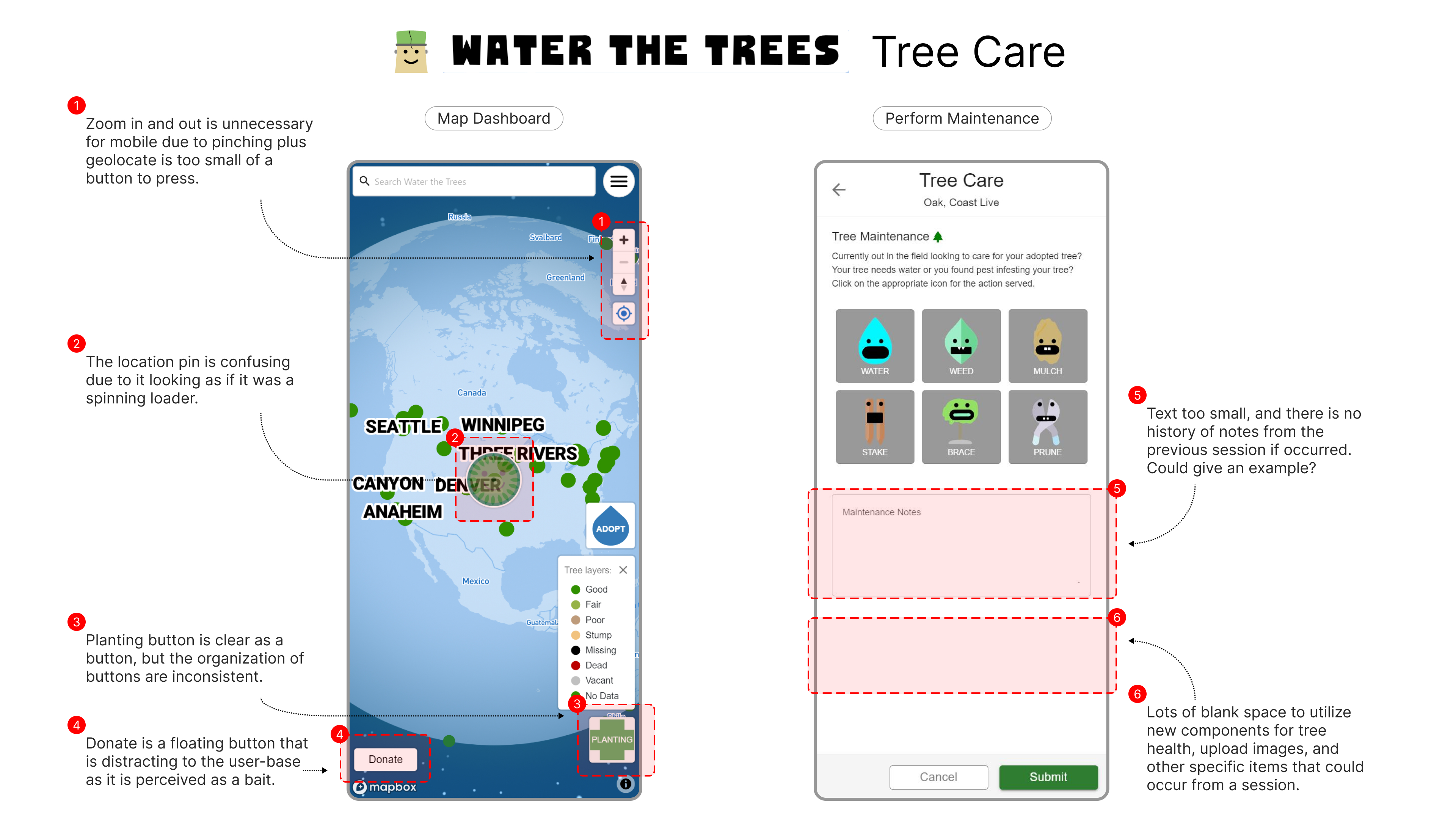
Ideation
Our initial focus centered on optimizing the transition between 'planting mode' and 'maintenance mode.' However, our research has illuminated a broader challenge — ensuring the seamless accessibility of 'planting mode' without relying on manual finger interaction. The refined problem emphasizes enhancing user experience and interface accessibility for a more inclusive and user-friendly design.
Challenge
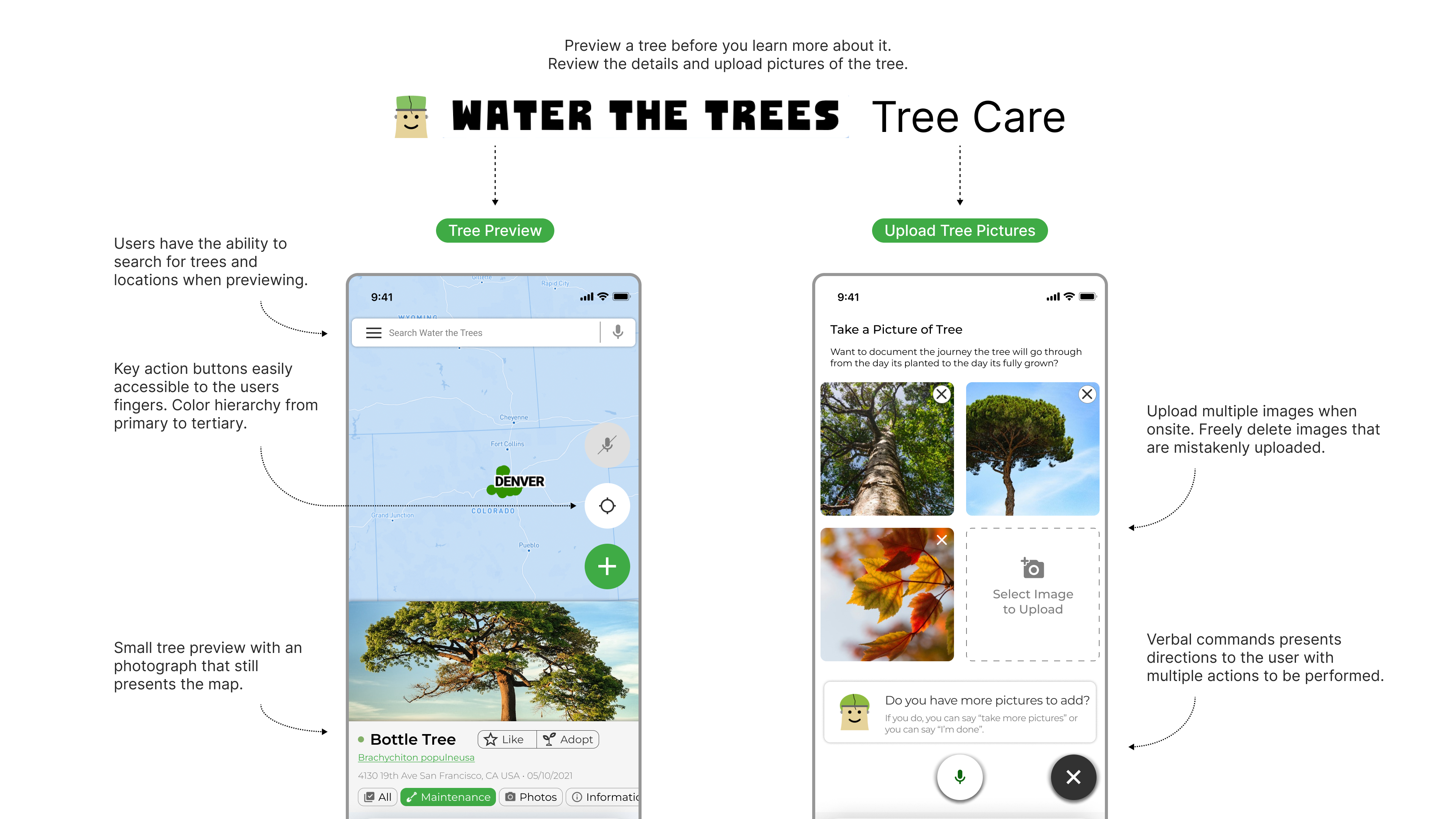
How can we simplify the process of learning to use the planting feature? We propose providing continuous directions and guidance to users, using step-by-step messages. Additionally, we have implemented message bubbles to prompt users through each necessary action, guiding them to successfully add a tree to the map.
How can we ensure accessibility to the "planting mode" for users who are unable to use their fingers during a planting session? Our solution involves enabling verbal commands to guide users through each step of the "planting mode." We aim to offer continuous feedback and options at every stage, assuring users that they are progressing towards successfully documenting a tree.
.webp)
User Testing & Iterations
I conducted thorough research, identifying common user pain points and contextual nuances related to the planting process, considering the varying levels of tech literacy among arborists. Coordinating a substantial sourcing initiative, I executed prototype testing both in-person and remotely. Engaging with key stakeholders such as Friends of the Urban Forest and Jersey City Parks, I gathered valuable insights. The following highlights key design decisions derived from usability tests involving 14 participants.
Arborist-Friendly Interactions
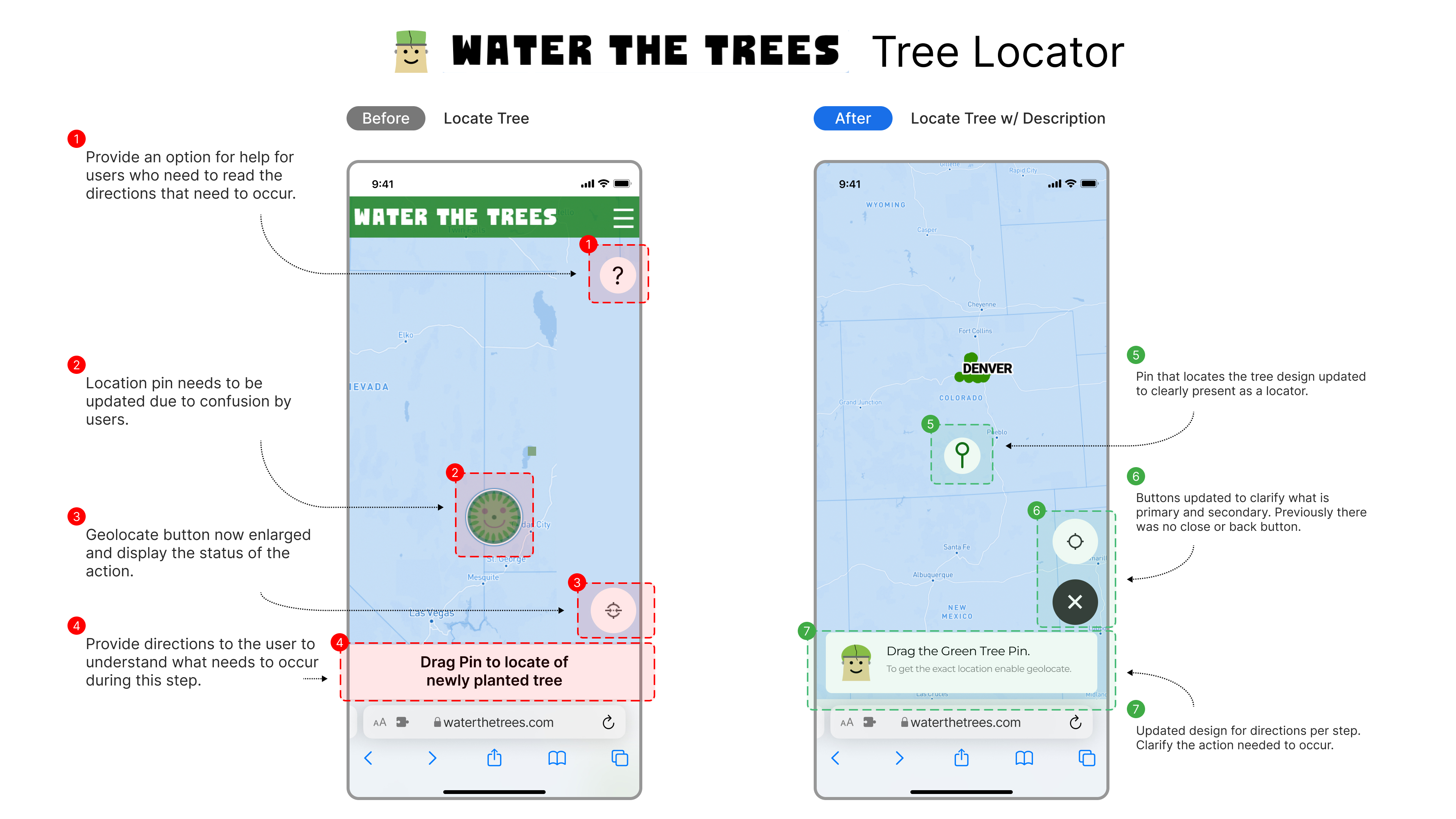
After conducting tests, I discovered a spectrum of tech literacy among arborists. Some faced challenges in comprehending instructions for locating trees. This insight further informed and enhanced our Call-to-Action (CTA) strategy.
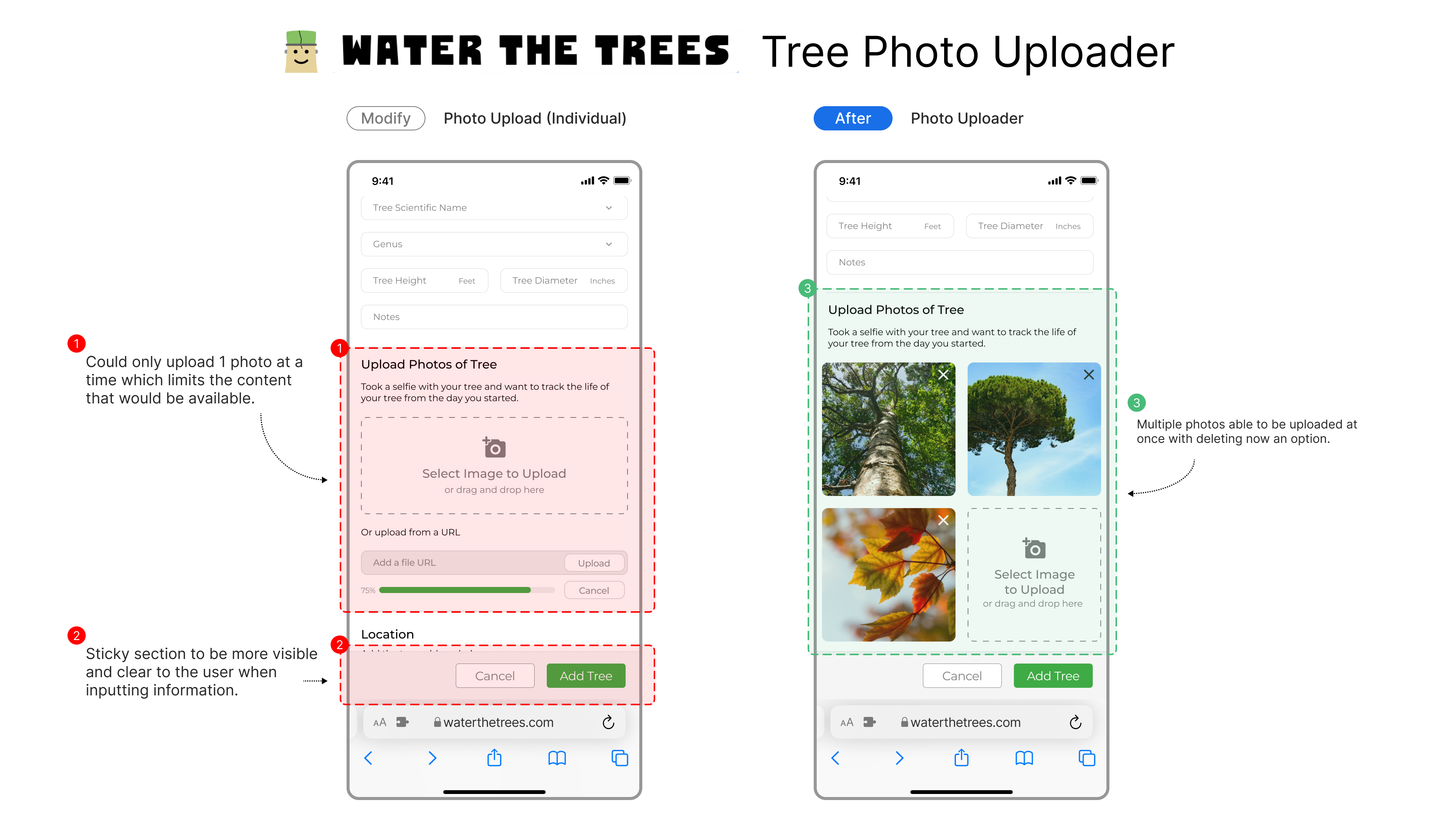
Refining the Photo Uploader
In the testing phase, I discovered that arborists place significant emphasis on visuals and mass planting. Regrettably, incorporating mass planting as a feature wasn't technically feasible within the project's scope.
Final Design
Pin Point Accuracy
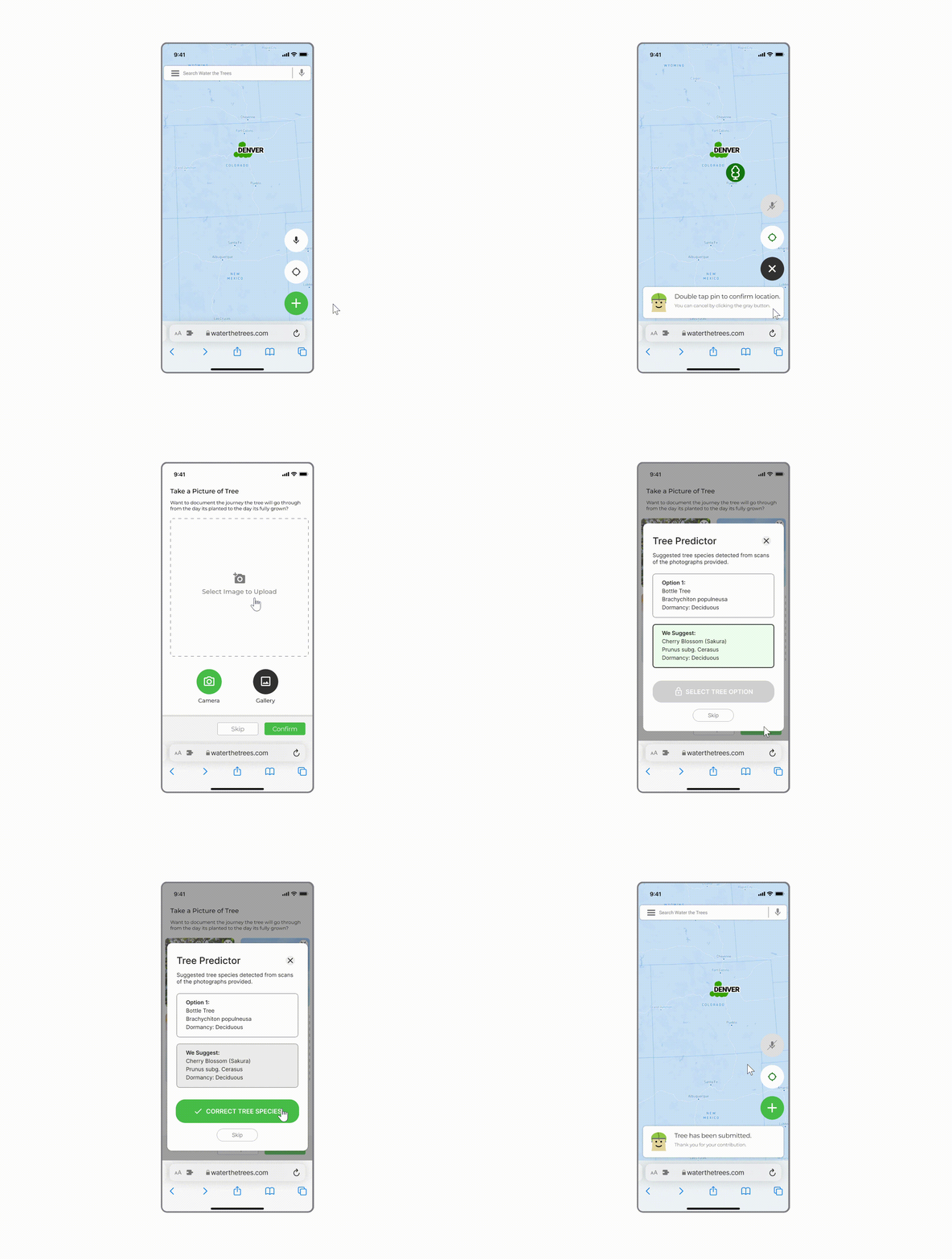
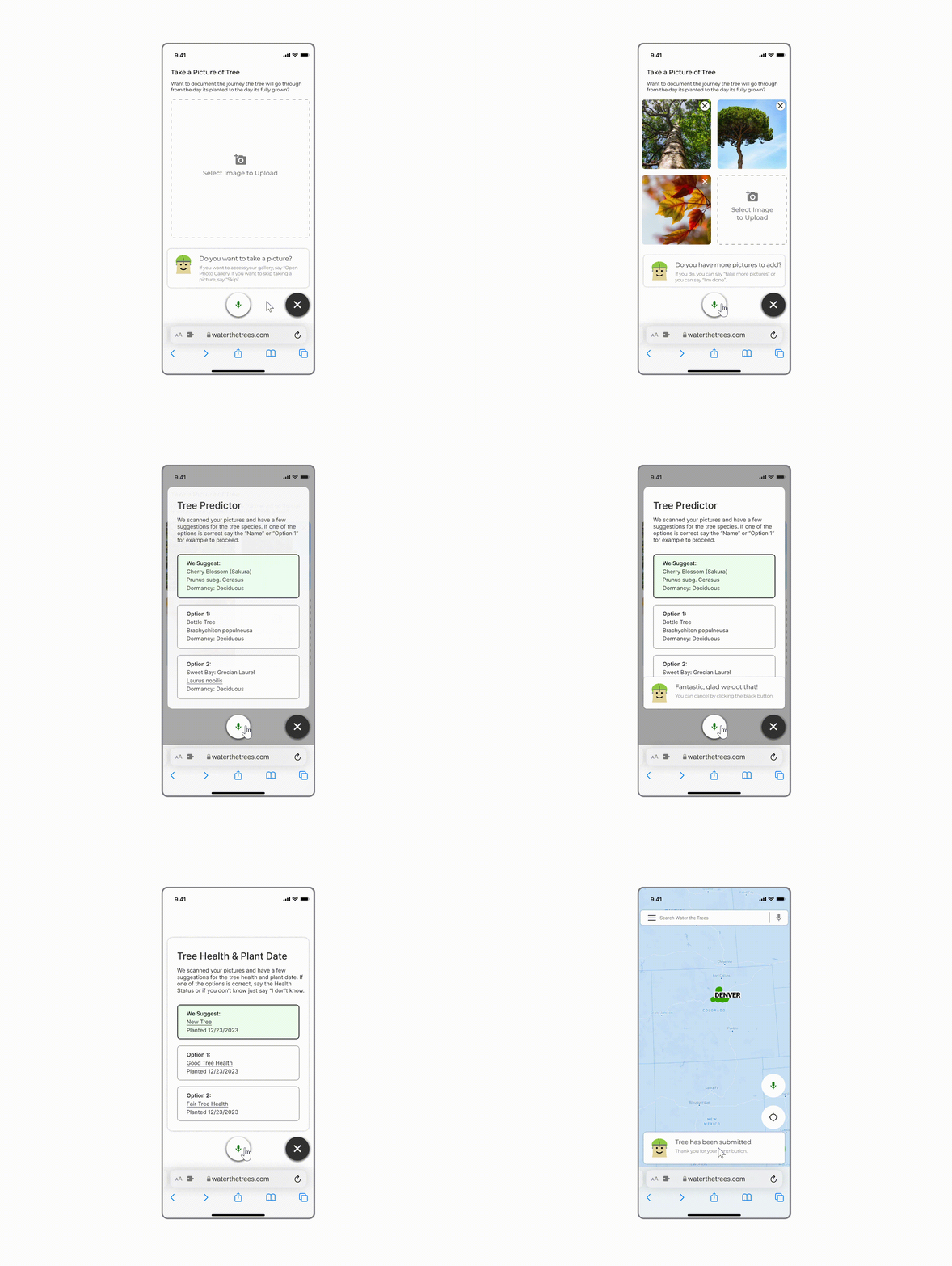
Arborists exhibit a range of tech literacy levels, which has led tree enthusiasts to shy away from digital documentation due to their field-specific knowledge limitations. Now, arborists can adopt a user-friendly, step-by-step approach that leverages artificial intelligence for tree predictions through image scanning, streamlining, and expediting the entire process.
Final Design
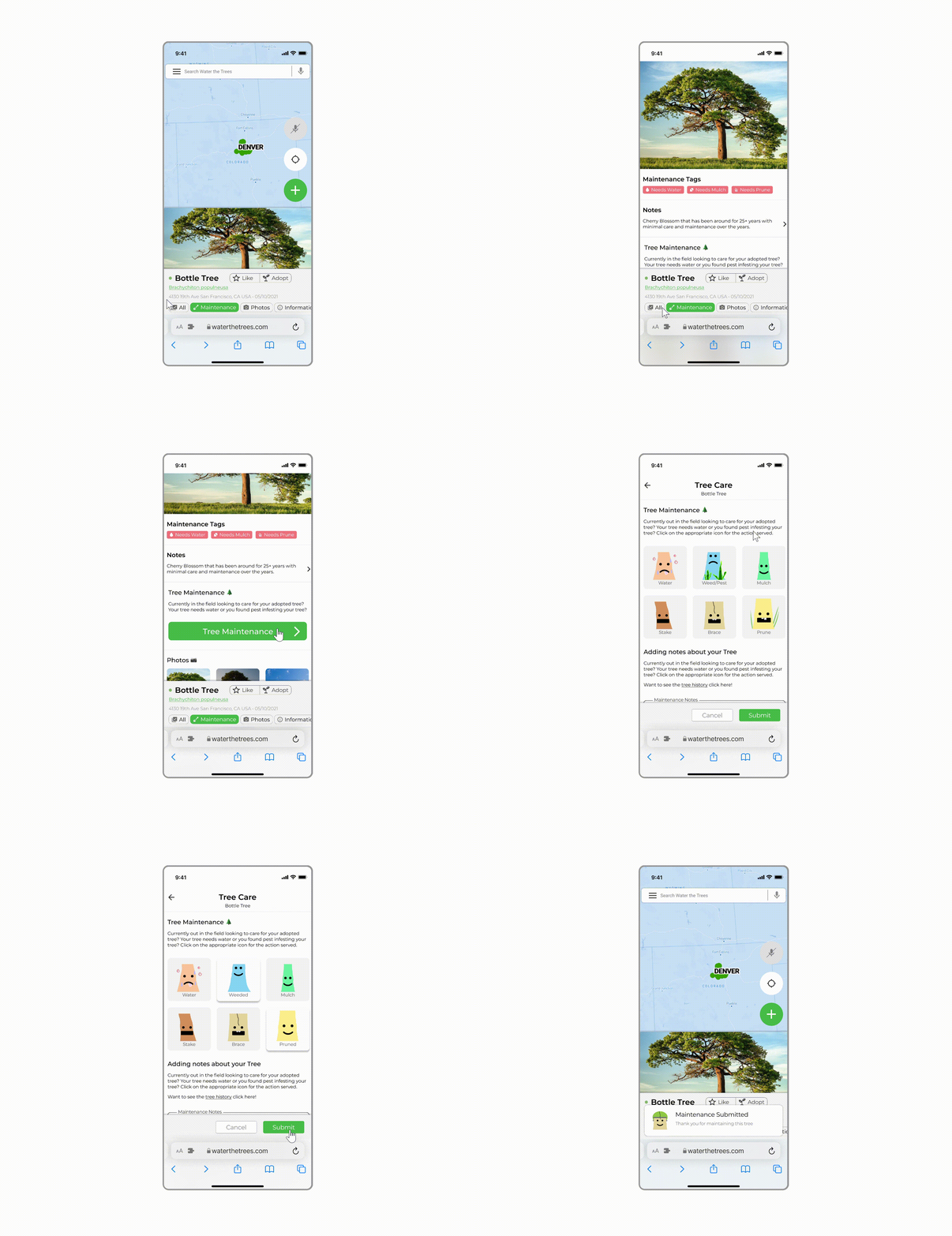
Constant After Tree Care
Arborists dedicate their additional time to nurturing trees that require special attention for survival. The ability to discern specific tree care requirements is crucial, as it varies based on unique circumstances. Today, arborists can efficiently choose from a curated list of tree care options tailored to the individual needs of each tree.
Final Design
Hands Free Documentation
Over the years, arborists have faced health issues affecting their wrists, hands, and fingers, hindering their ability to use mobile apps effectively. To address this challenge, when documenting a tree, arborists can now seamlessly navigate through "planting mode" by following step-by-step directions provided through A.I. voice commands.
Takeaways
Results
Final Designs Handoff:
- Completed handoff to Dev Team; designs in review.
Impact on Planting Mode:
- Achieved a remarkable 55% increase in Planting Mode completion rate.
Ongoing Improvements:
- Voice commands work in progress; not all changes implemented yet.
Proposed Future Success Metrics:
Increase in Arborist Tree Care:
- Measure success by the rise in arborists' engagement with the platform, evidenced by constant reporting.
Enhanced Tree Predictions:
- Track the increase in accuracy for tree predictions per scan, showcasing the system's continuous improvement.
Comprehensive Documentation:
- Evaluate success through the increased documentation of both new and existing trees during each planting session.
Efficiency in Planting Sessions:
- Aim for a decrease in incomplete planting sessions per arborist, indicating improved workflow efficiency.
Reduced Tree Mortality:
- Measure success by the decrease in the number of newly planted dead trees per city, showcasing the positive impact on urban greenery.
Key Future Objectives:
- Continued refinement of voice commands for a seamless user experience.
- Strive for complete implementation of proposed changes.
- Prioritize ongoing collaboration with Dev Team for swift and effective updates.
Reflection
In the course of addressing the initial problem, a deeper understanding led me to identify a more impactful issue, prompting a pivot in direction. I successfully gathered insights and persuaded the Water the Trees engineering team to embrace this shift. This experience taught me the importance of proposing modifications or pivots when supported by research evidence. Our collaborative efforts allowed us to reallocate resources effectively, leading to increased user satisfaction and a positive impact on the overall user experience. This demonstrates my ability to adapt and drive positive change based on user-centric insights.