QuikSlip ┃ Impound Towing
A Bit of Context
QuikSlip Towing (QST) serves as the hub for dispatch companies and impound towers seeking to tow vehicles from private properties. A notable aspect of QST is the Overdue List, enabling dispatch to efficiently handle and allocate tasks to tow truckers for the removal of vehicles that infringe upon parking regulations. Among its features, the queuing of cases enhances operational efficiency for dispatch companies, positively impacting over 80 tow truckers.
Frame the Problem
Based on my investigation, over 40% of truckers reported challenges in radio communication, citing problems such as poor connections, language barriers, and difficulty hearing dispatch instructions regarding case details. This prompted the development of QST, a solution designed to enhance the overall experience for impound truckers by addressing issues related to communication clarity, job comprehension, and the clarification of job details.
My Role
I spearheaded the comprehensive design strategy for trucker interactions in accepting or rejecting tows on the dashboard, and I also initiated the pilot program for optimizing the dispatch ecosystem in QuikSlip.
Ideation
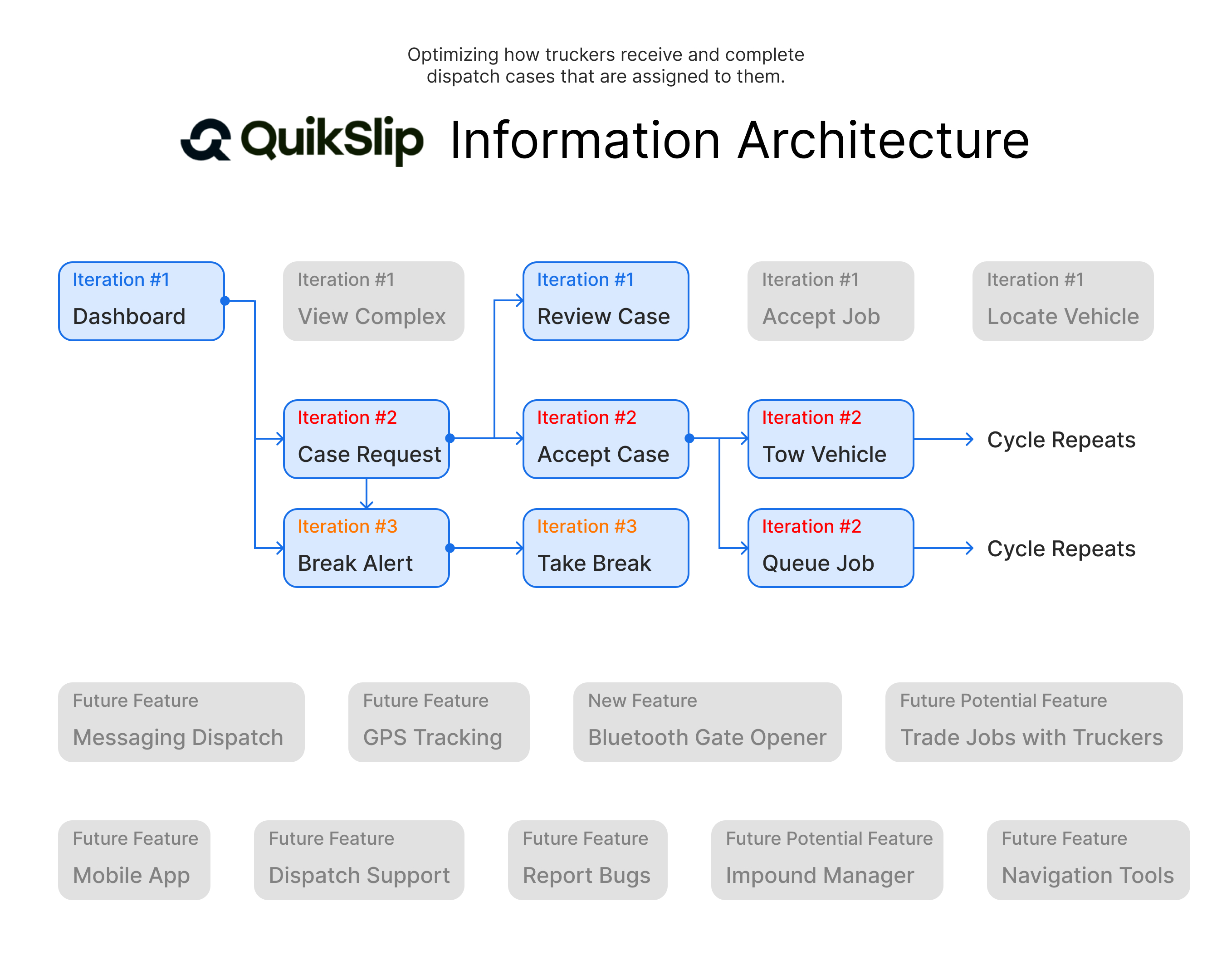
I had the opportunity to engage in conversations with truckers ranging from 2 to over 25+ years of experience in towing vehicles. Through these discussions, I developed a journey map that outlines the stages of a trucker's operation, including standby, receiving a case, accepting a case, completing a case, and the ongoing cycle.
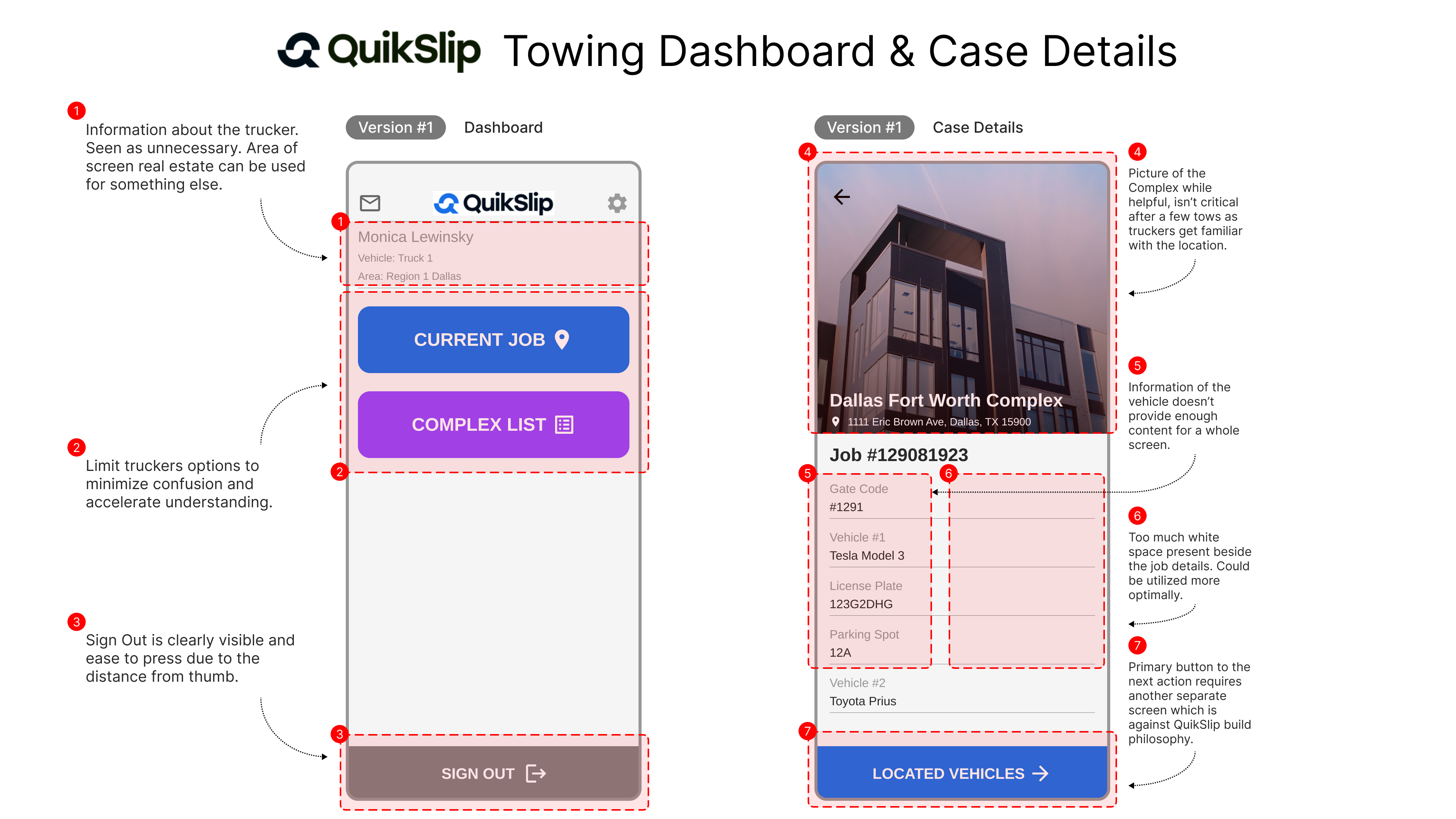
Based on the insights gathered, I created a prototype aimed at optimizing efficiency and enhancing understanding of impound towing. The primary challenges addressed were:
1. Simplifying Job Understanding:
Objective: How can we make assigned jobs easier to comprehend?
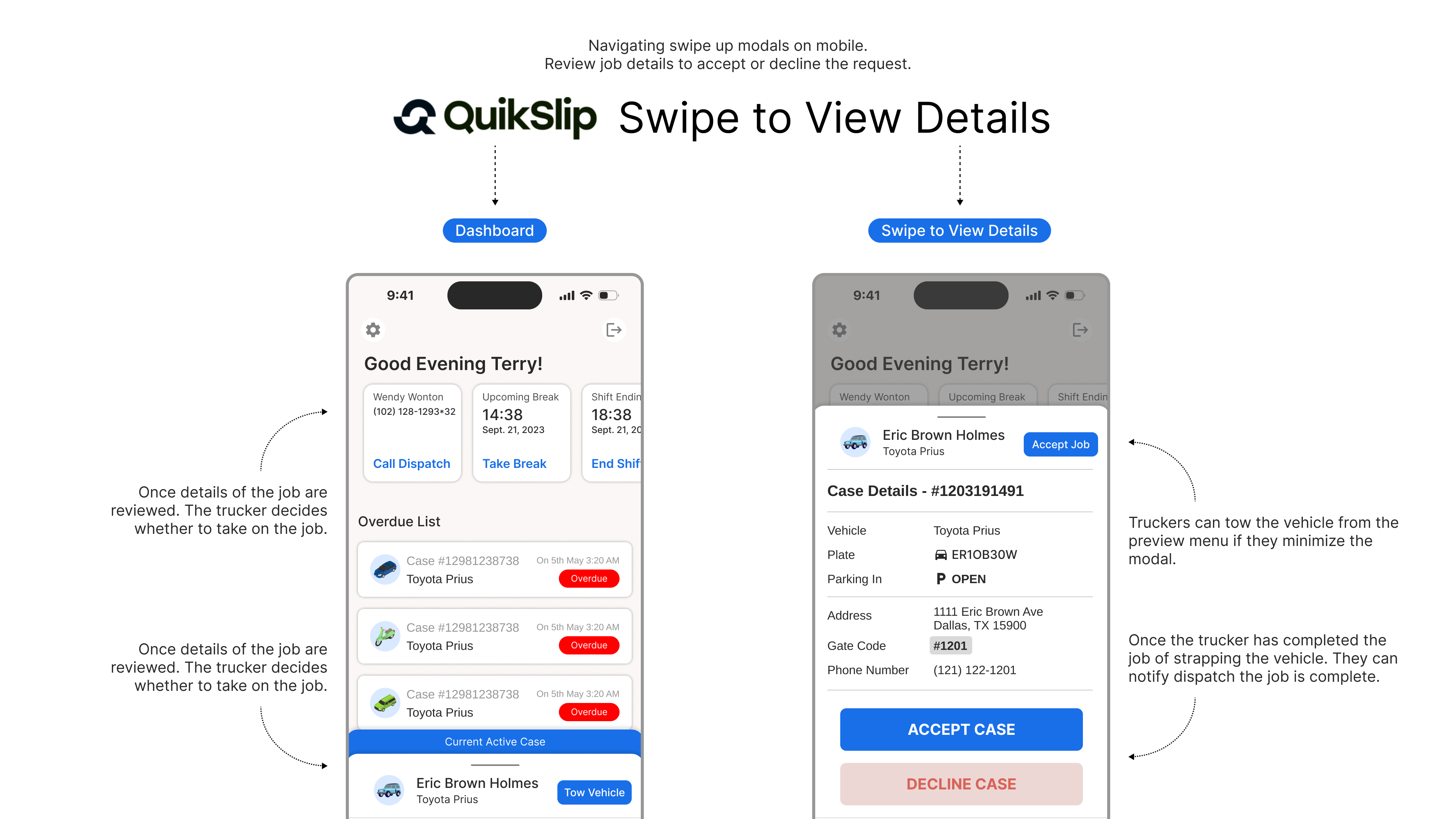
Solution: Design an experience that allows truckers to either accept any job that appears or easily access and read details of the alerted job.
2. Improving Job Assignment Efficiency:
Objective: How can we enhance the efficiency of assigning jobs?
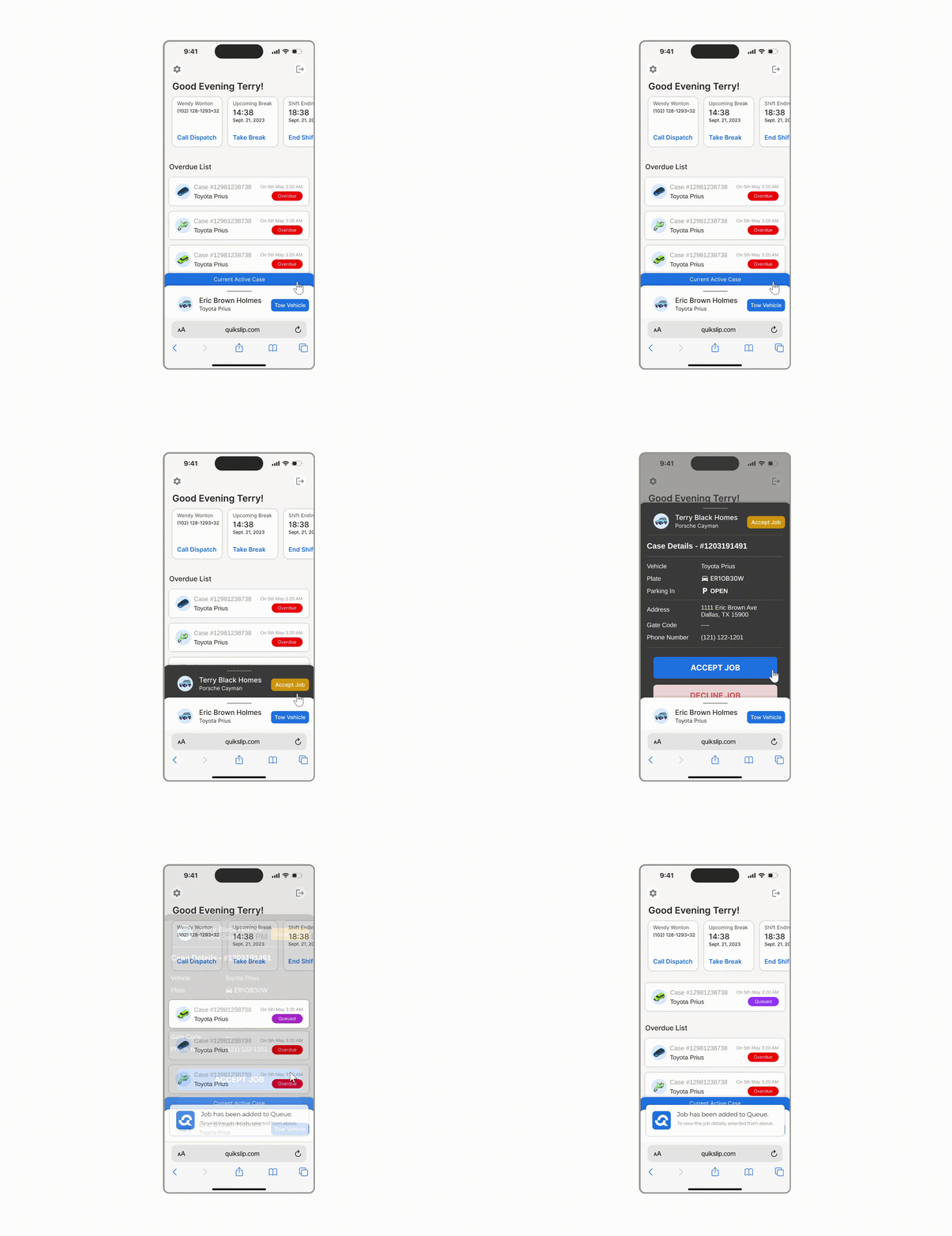
Solution: Implement a queue system that enables truckers to scan upcoming jobs in advance, facilitating optimized routing. A second slide-up feature was added for improved accessibility, allowing for quick scanning of details and seamless acceptance of the next job.
User Testing & Iterations
Throughout my research, I focused on understanding our users' challenges and contexts, particularly in the realm of dispatch operations where truckers navigate a landscape filled with various historical technologies still in use today. To deepen my insights, I conducted in-person engagements with impound truckers across different cities and states, collaborating with dispatch companies in California and Texas. This involved participating in three on-site events and engaging with over 20 truckers.
From these interactions, I distilled key design decisions resulting from usability testing involving four candidates. Notably, one challenge highlighted was the difficulty in deciphering dialogue.
Decipher Dialogue is Difficult
Through testing, it became evident that truckers experienced frustration as they had to repeatedly request dispatch case details. This insight reinforces our comprehension of the essential details to present on each card.
Trucker Accessible Queue
By conducting extensive tests, I discovered that truckers prioritize a consistent workflow. This insight inspired the concept of implementing a queue system, enhancing tow efficiency for truckers.
Final Design
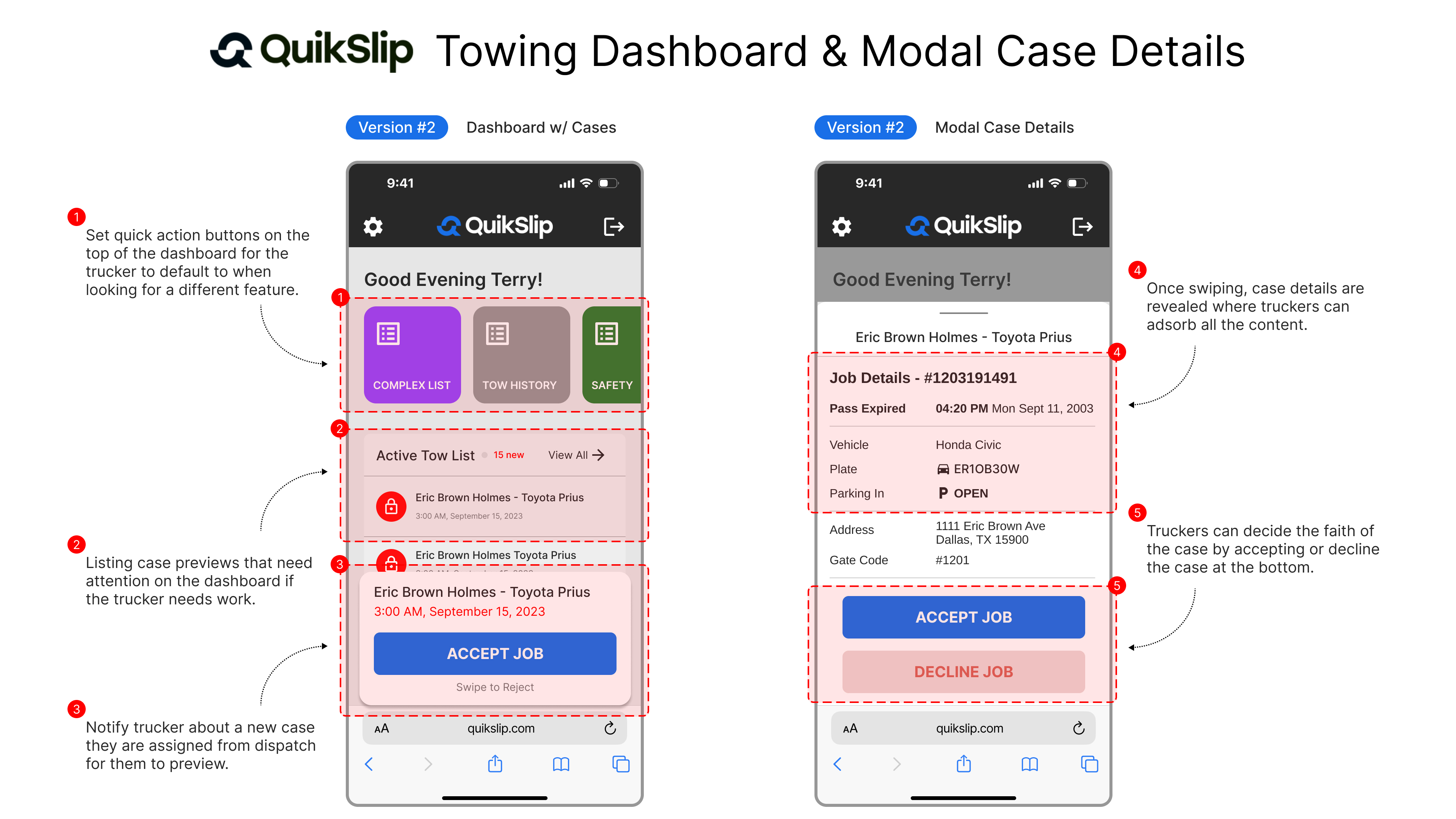
Route to the Optimized Job Site
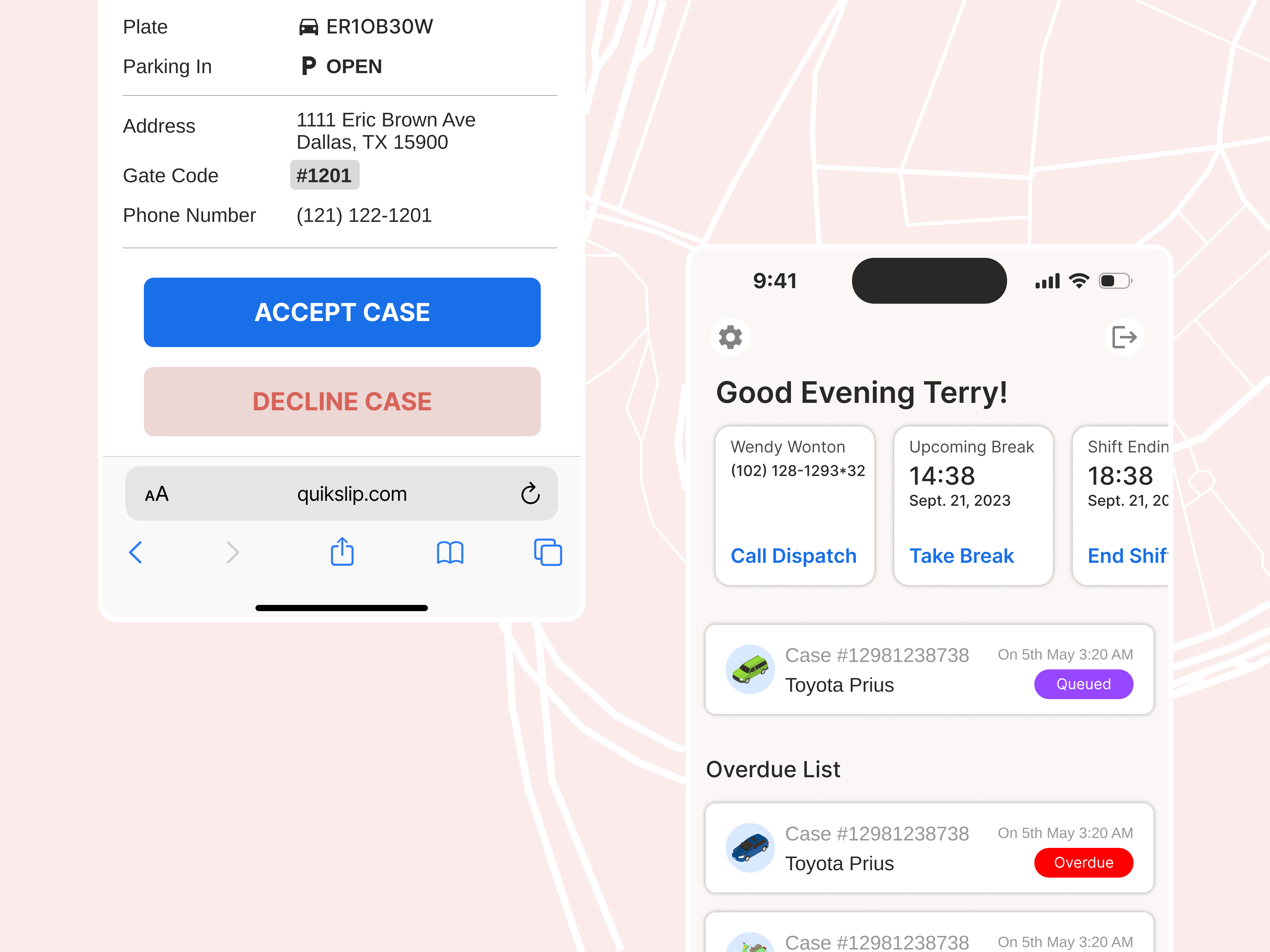
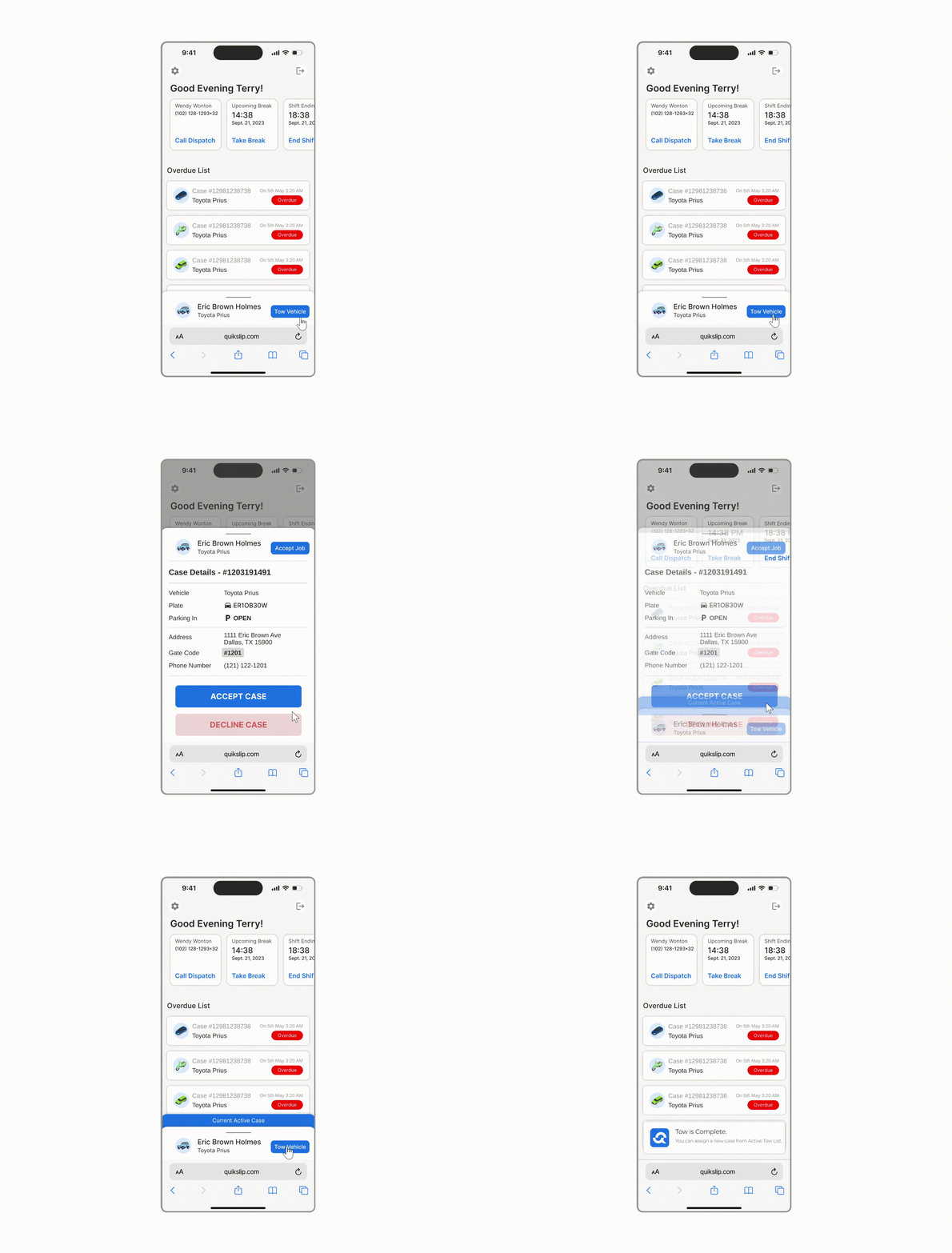
Truckers receive frequent notifications from dispatch regarding ongoing jobs. To eliminate ambiguity about a job's status, truckers receive a comprehensive alert that provides all the necessary details with a simple swipe up. This streamlined process allows truckers to accept jobs effortlessly by pressing a button, eliminating the need for verbal communication with dispatch.
Final Design
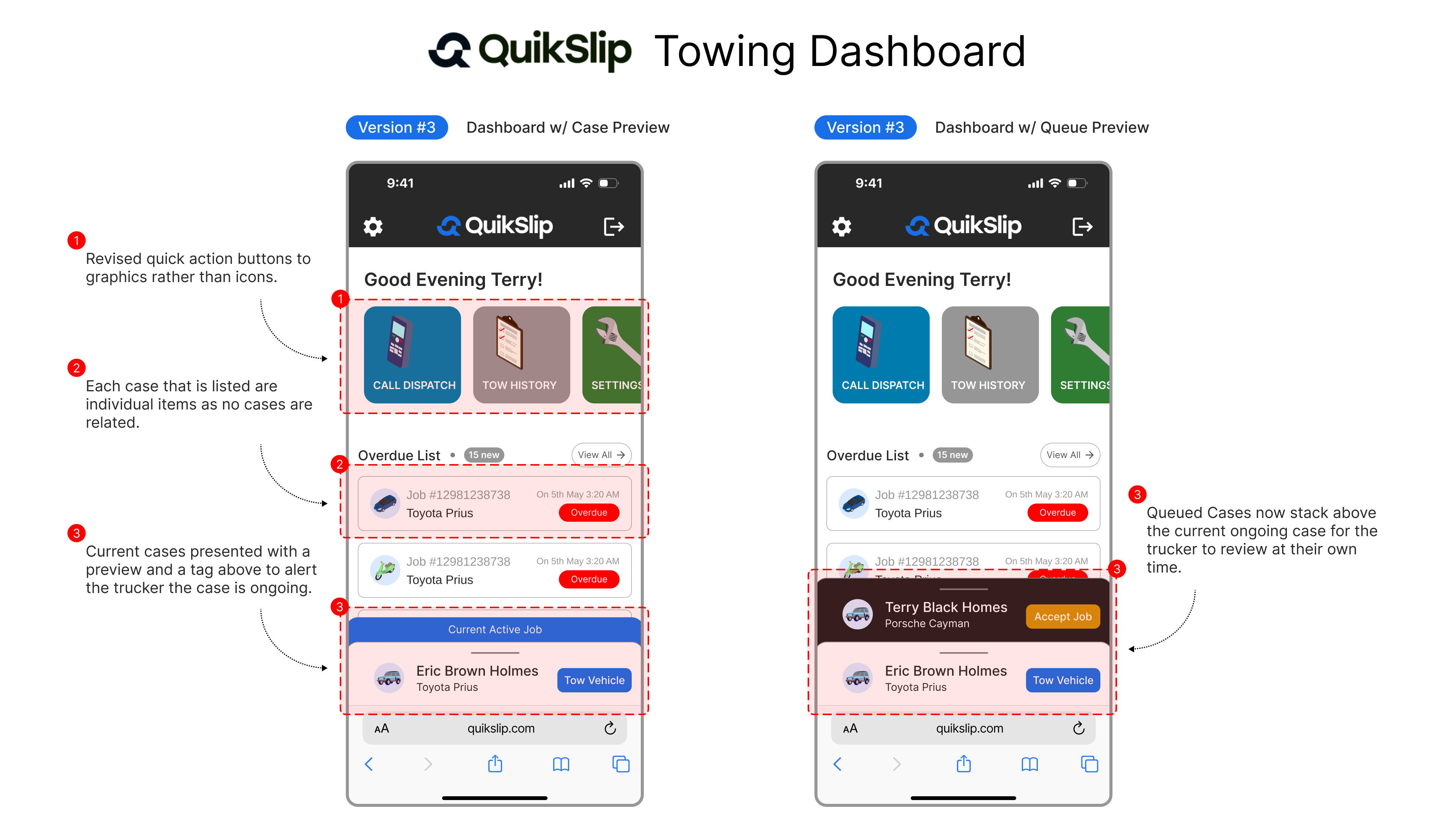
Queue Up the Tows
Truckers frequently wrap up a task and endure over a 20-minute wait for the subsequent one. When relevant to their ongoing route or assignment, truckers can proactively line up a second job to kick off immediately upon finishing the first. Additionally, they have the option to review a log of overdue vehicles requiring removal from private property for various reasons and proceed accordingly.
Final Design
Time for a Break
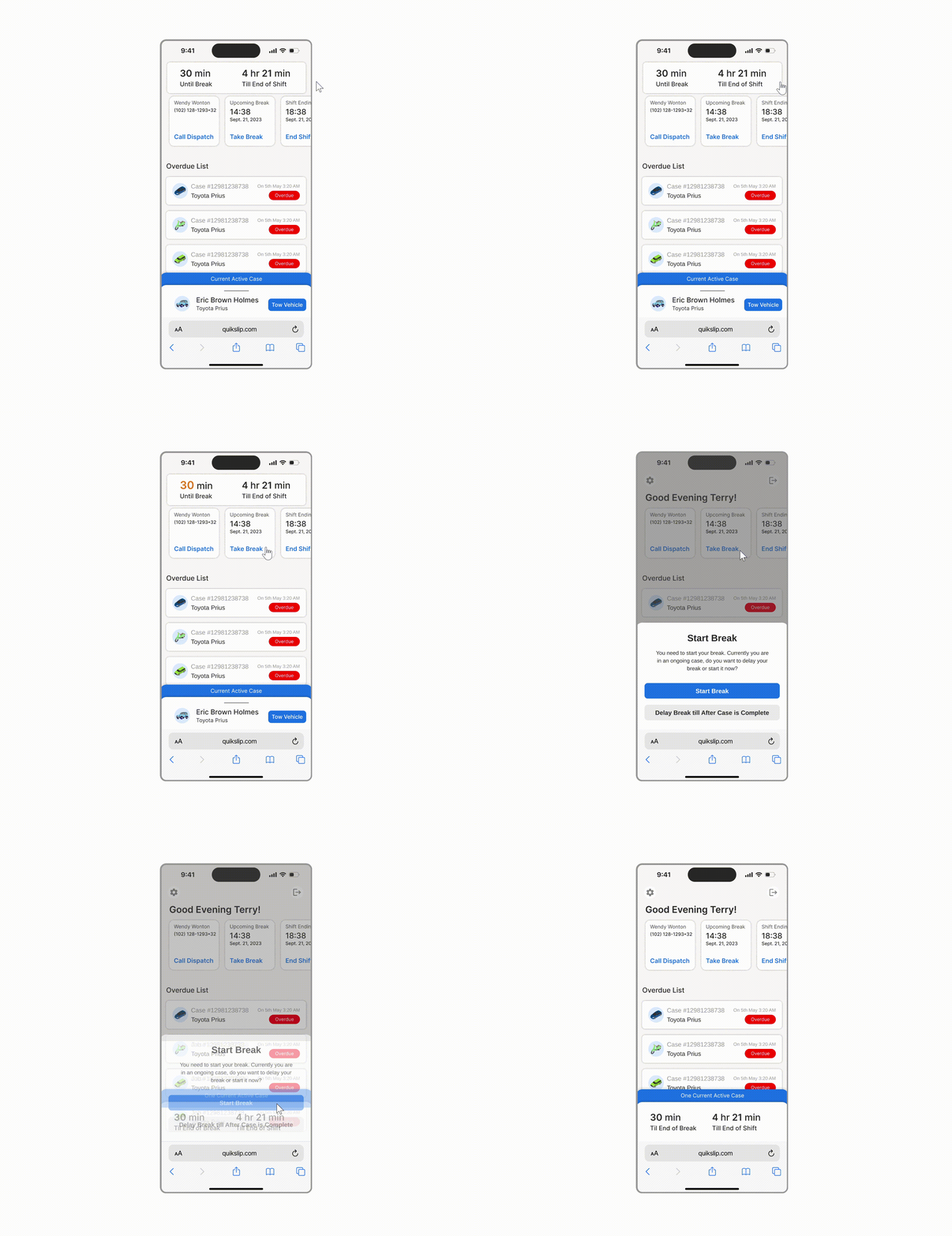
In the past, truckers handling impound operations often refrained from taking breaks, influenced by the commission-based pay structure inherent to the job. However, it's essential to note that legal regulations mandate specific break and lunch periods for truckers engaged in towing activities. To address this challenge, a proactive solution has been implemented. Truckers receive alerts well in advance of their scheduled breaks, affording them the option to either commence their break promptly or complete their ongoing case. This approach is designed not only to ensure compliance with legal requirements but also to accommodate the dynamic nature of impound operations and mitigate potential liability issues.
Takeaways
Successfully implemented features benefiting 80+ truckers, enhancing efficiency for 5 dispatch companies on QuikSlip Towing. User testing validated time savings by improving communication, understanding job details, and facilitating decision-making for truckers. Demonstrated proactive leadership by accelerating the product roadmap through the design of refined screens, fostering productive discussions between truckers and engineering.