Water the Trees ┃ Taxonomy
A Bit of Context
Introducing Water the Trees, a comprehensive platform designed for both city governments and tree enthusiasts. This people-centric app offers essential tools for documenting, maintaining, and tracking trees. As part of our ongoing commitment to environmentalists, we've recently rolled out a new feature known as 'Tree Taxonomy.' This feature empowers tree enthusiasts, environmentalists, and arborists by enabling them to record and document detailed tree taxonomies. By maintaining a precise resource for tree identification, classification, and description, users can enhance their understanding of each tree's unique characteristics. With functionalities like image uploads, content modification, and insightful statistics, our platform has already made a significant impact, recording information for over 1,200+ unique trees in our database.
Frame the Problem
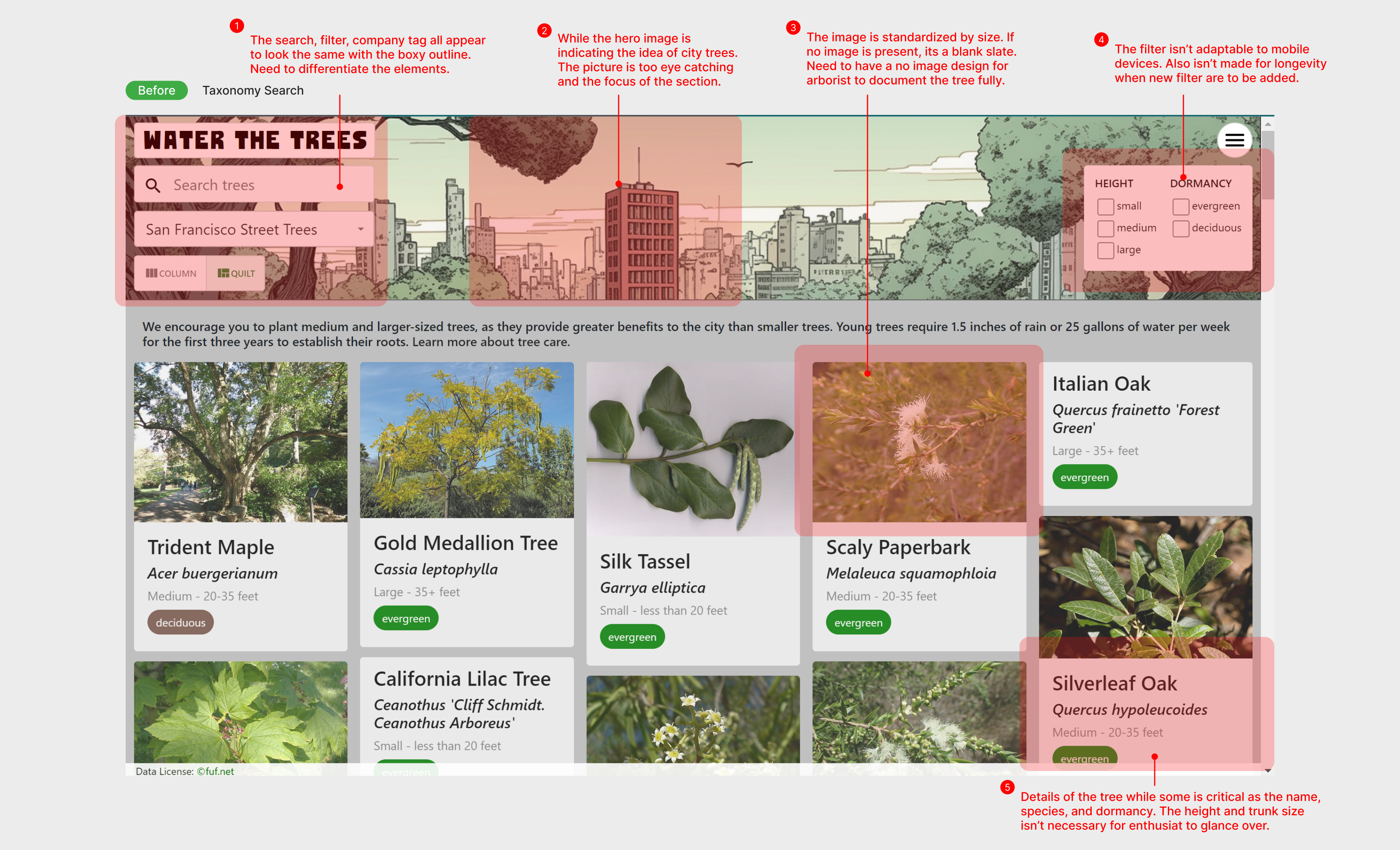
Currently, arborists can't modify or add content to the taxonomy, hindering community contributions. The existing platform is confusing and lacks vital content.
My Contribution:
I orchestrated the end-to-end redesign of Tree Taxonomy, focusing on enabling the creation and maintenance of new tree species profiles. Through a pilot UX redesign, I introduced visuals and new profile sections for an improved user experience.
Ideation
The initial challenge was enhancing the tree profile by adding more content for a comprehensive overview. However, my research revealed that users faced difficulties in modifying and maintaining content for each tree profile page. To address this, we sought solutions to make tree profiles more easily navigable and editable.
Approach
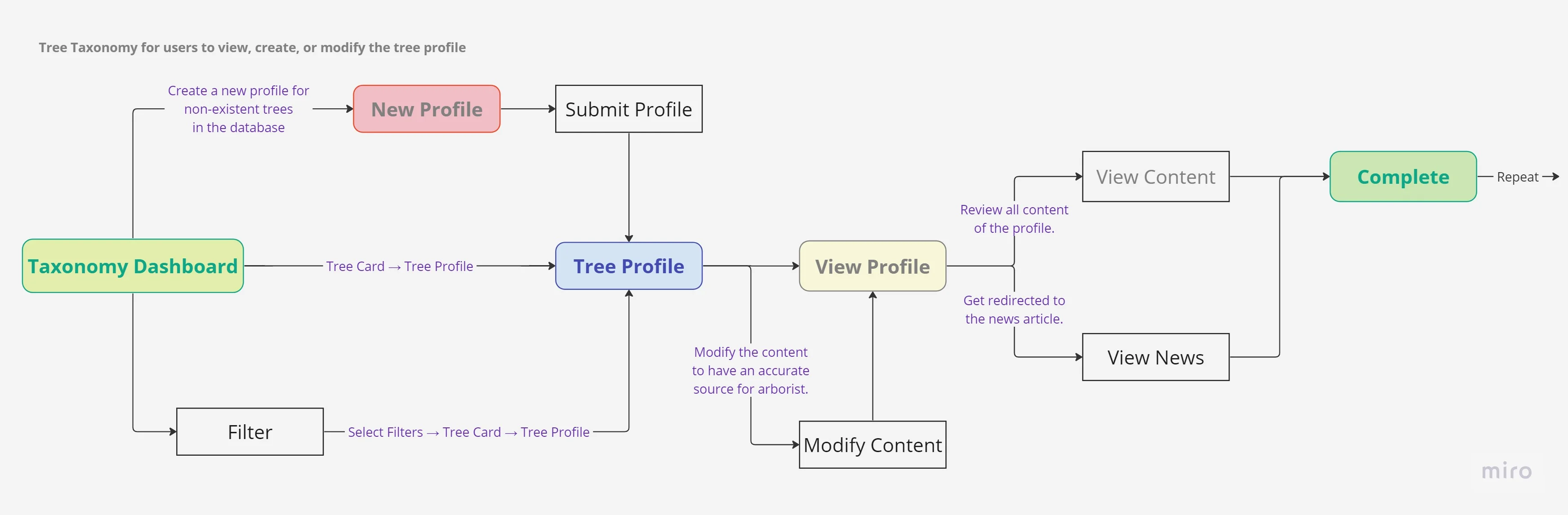
Our approach to improving clarity and consistency in finding tree profiles involved creating distinct sections and categories for information. I structured the information into 10 tab sections, enhancing user navigation and facilitating a more intuitive exploration of specific tree details.
In response to the challenge of simplifying the modification and creation of tree profiles, our strategy was to proactively present opportunities for users to update the profiles. I developed a user-friendly form that prompts users to enhance and accurately depict tree information, ensuring a more precise representation.
User Testing & Iterations
From research, it's clear that users desire an improved method for creating and modifying tree profiles due to the current profiles' lack of content. Stakeholder input, particularly from Friends of the Urban Forest and Jersey City Trees arborists, shaped decisions made by seven participants.
Arborist literate tree form testing highlighted varying levels of technological knowledge among arborists, with many expressing frustration with online forms. This influenced our approach to modifying and creating tree profiles.
In testing for refining the Tree Profile, it was evident that arborists prioritize content categories like soil, zones, growth, and care. This strengthened our understanding of key categories and sections arborists find most important.
Final Design
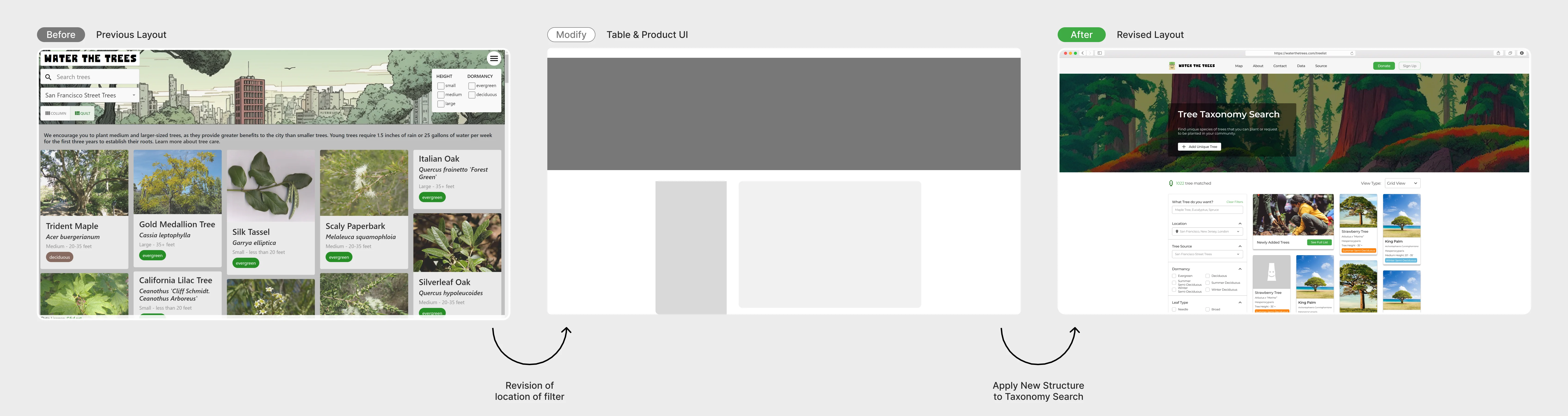
Find the Trees on the Fly
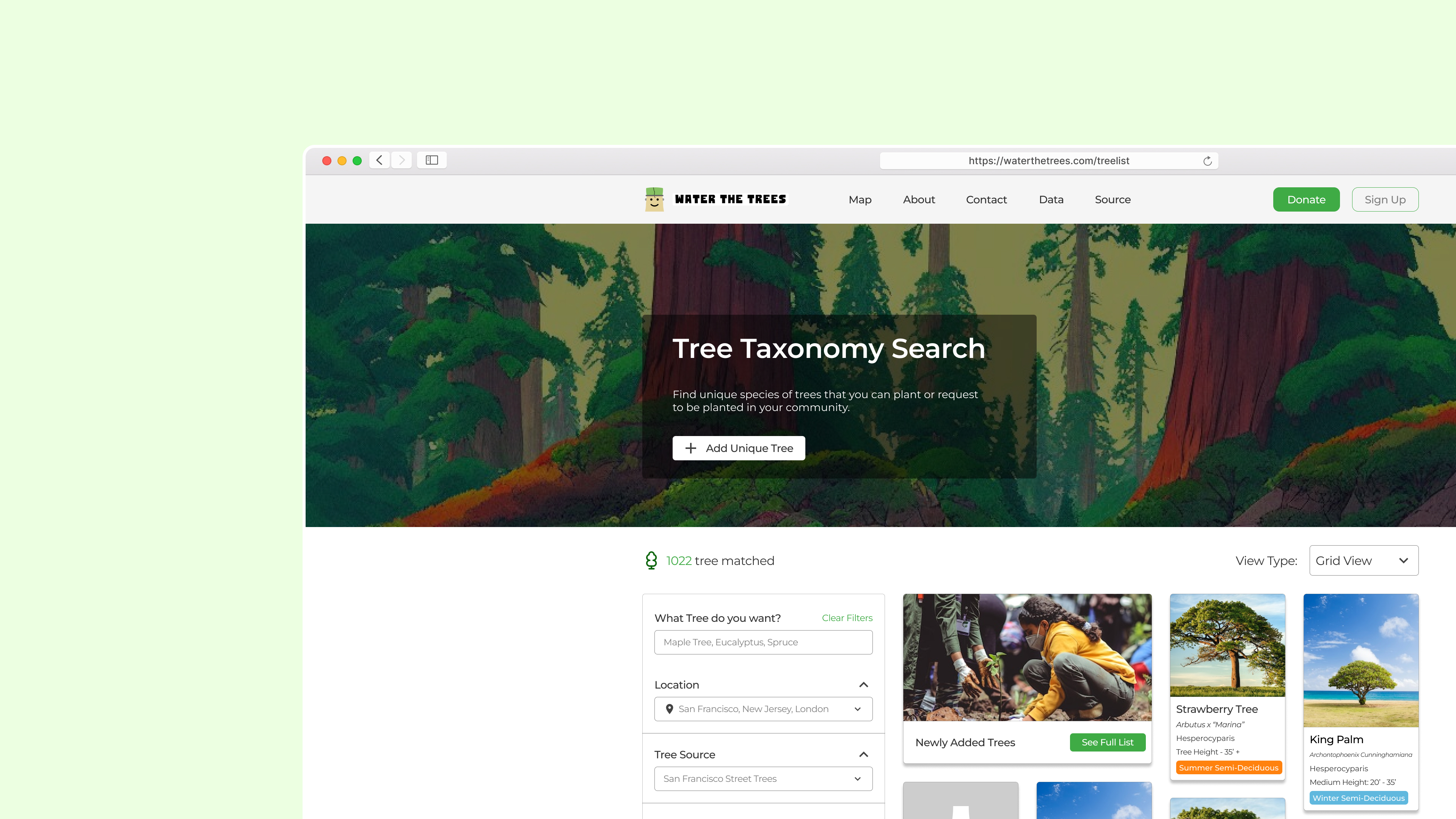
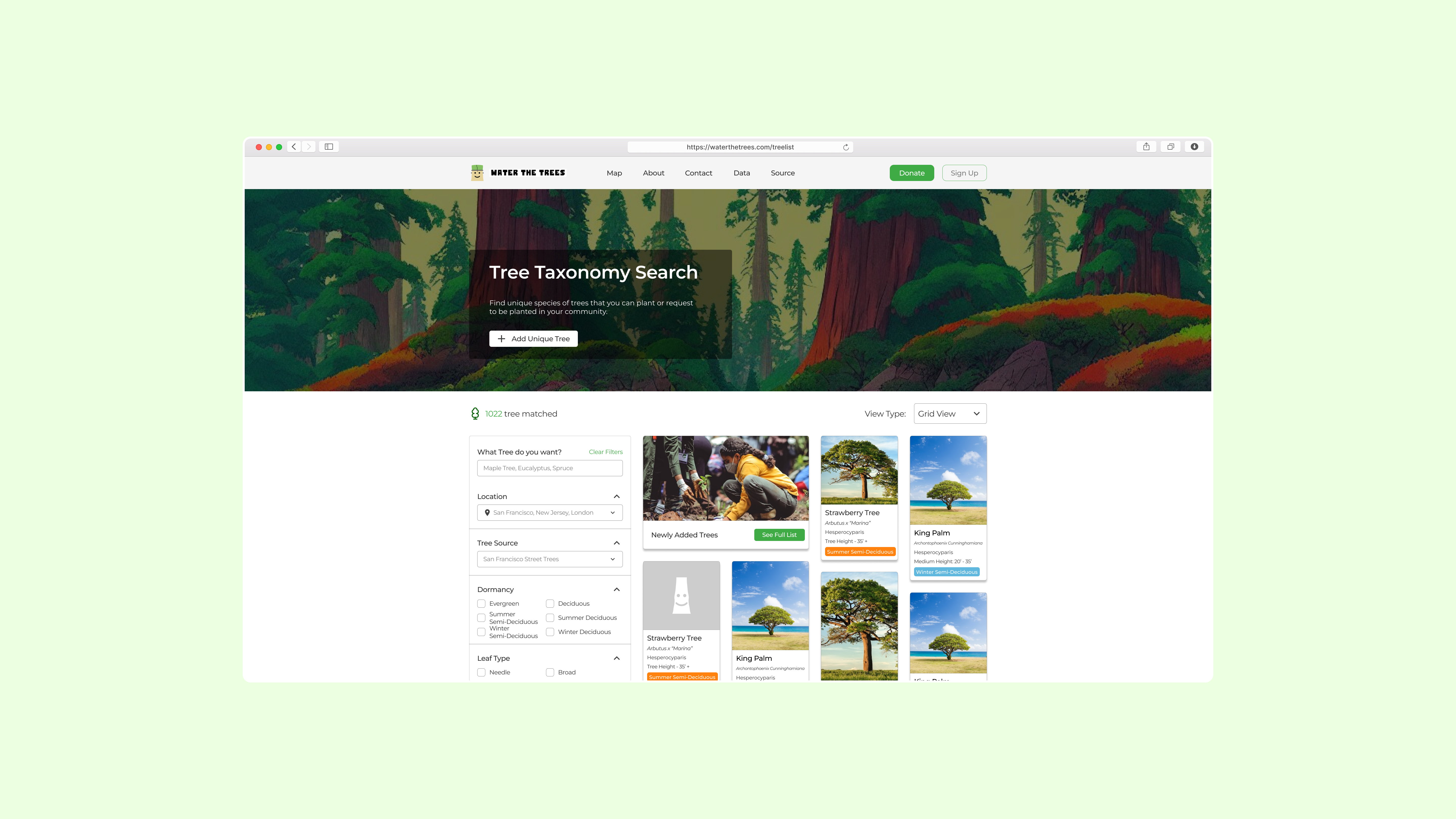
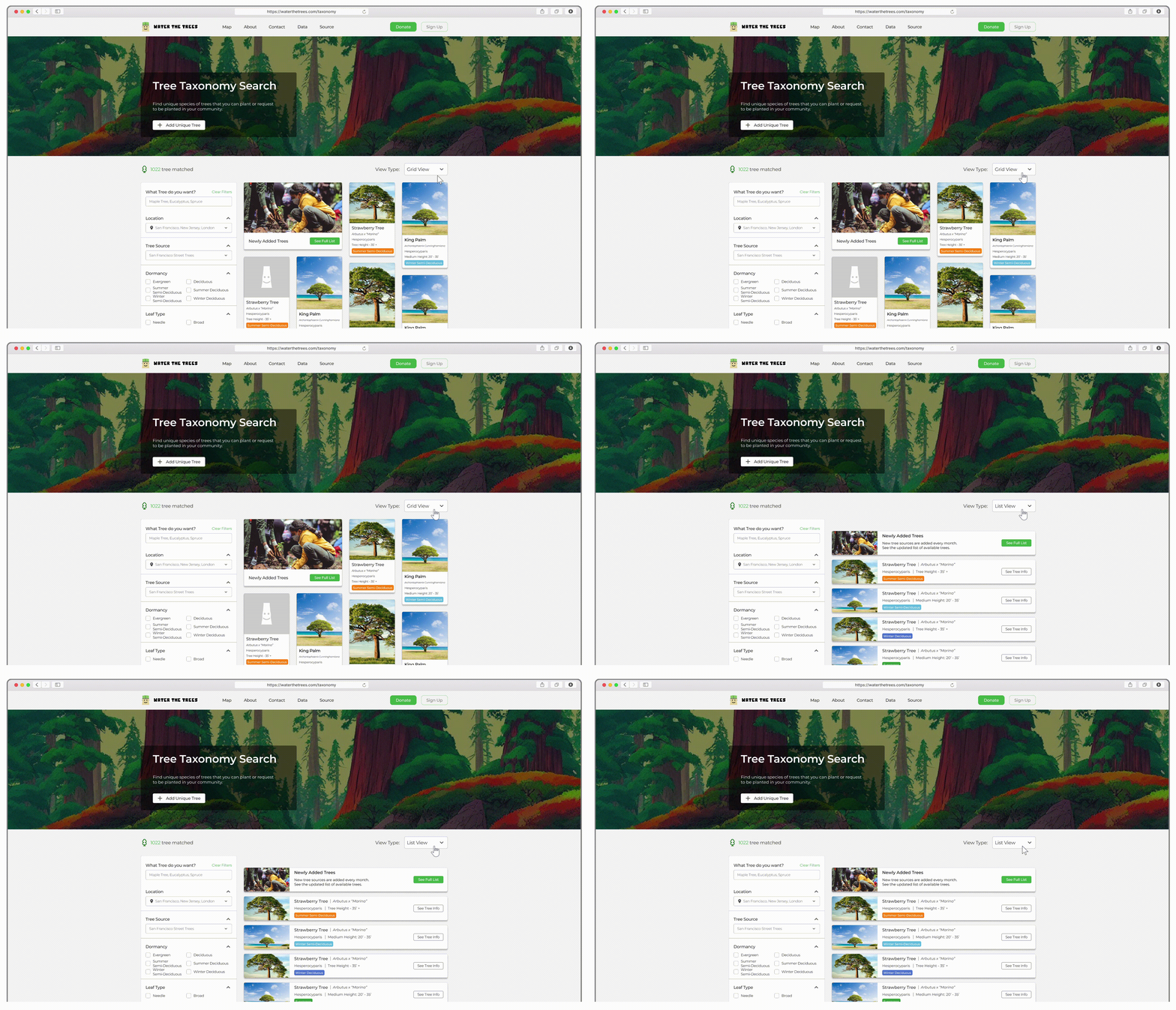
Users can now freely explore, search, and filter unique trees of their preference using the taxonomy search. The second MVP introduces functionalities that enable users to precisely specify and refine their selection of tree types through various view options tailored to their requirements.
Final Design
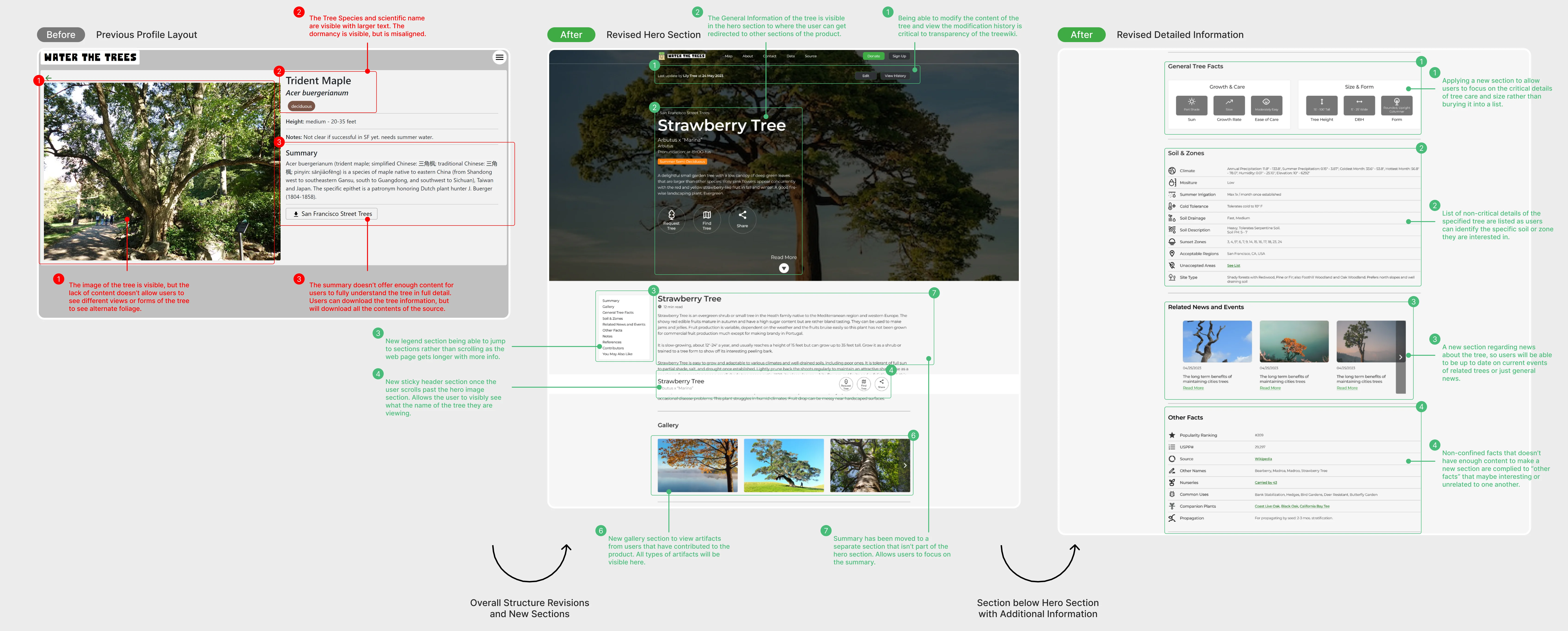
What about this Tree?
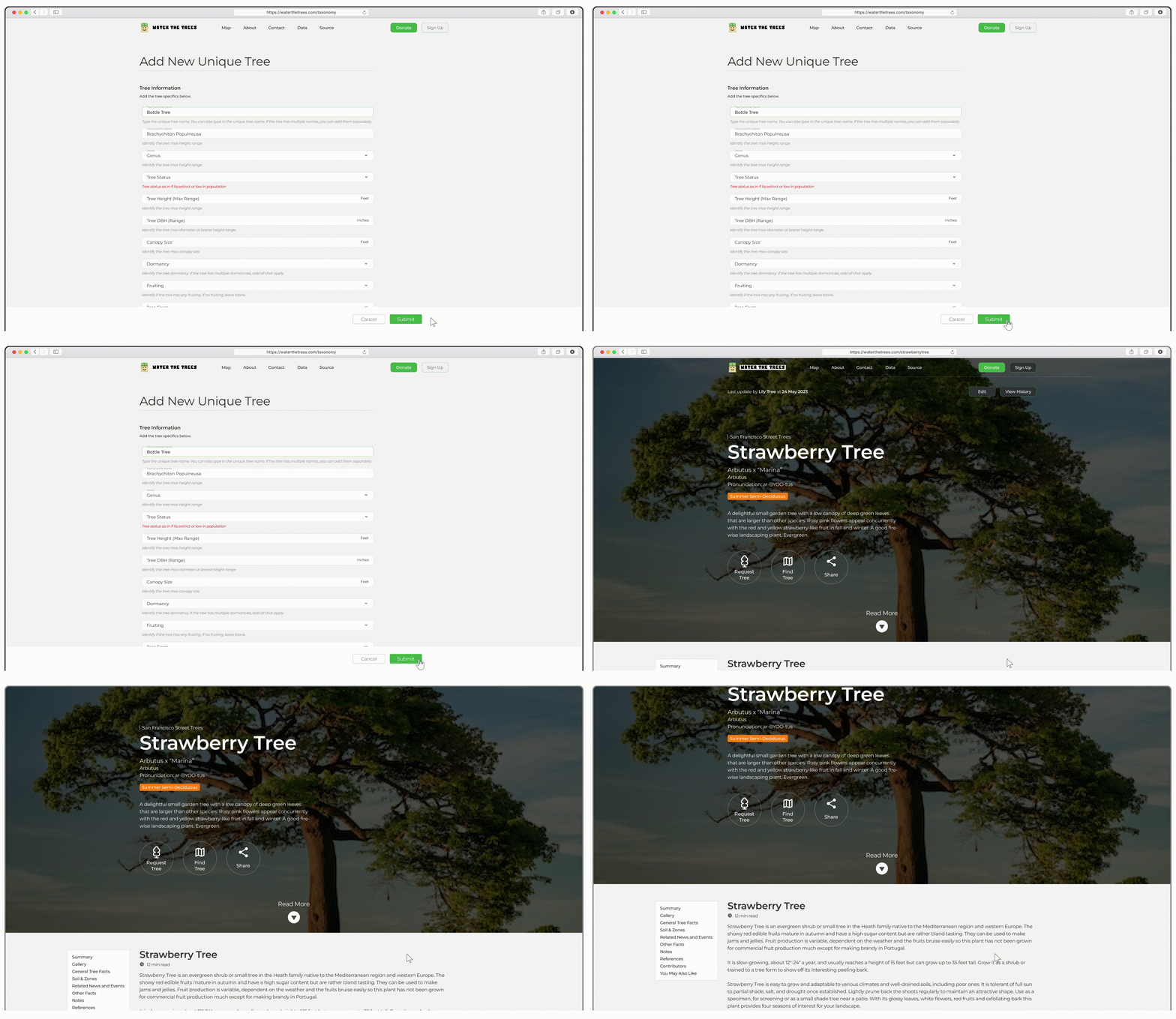
Detailed descriptions and sections now accompany profile-specific tree information. This enhanced feature grants tree profiles the flexibility to display or make accessible specific information based on the community's contributions and modifications.

Final Design
More to Go
Users can now edit and generate tree profiles not present in the taxonomy. The MVP enables users to input or update information in the tree profile and complete a new profile form to finalize details for a tree species entry.
Takeaways
Results
The Dev Team has received the final designs and is currently reviewing them. There has been a 30% increase in the creation of unique Tree profiles. While not all changes have taken place, I suggest the following metrics for future success evaluation:
- Growth in community engagement in modifying and creating tree profiles.
- Expansion of inaccurate tree data for educational purposes.
- Reduction in the submission of inaccurate data by community members.
Reflection
Through this experience, stemming from the communities' desire to engage in collecting and developing tree profiles, I discovered that experts in the field, even if not technologically inclined, are inclined to share their knowledge through a tree profile. Investing significant time immersing myself in the user base allowed me to thoroughly grasp their perspectives, proving invaluable for a product tailored to arborists. The collective efforts of the team enabled us to effectively champion users and devise a solution that met their requirements.